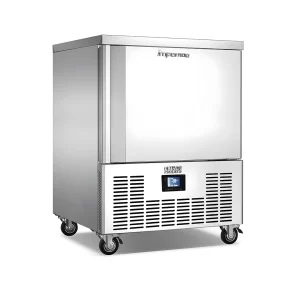








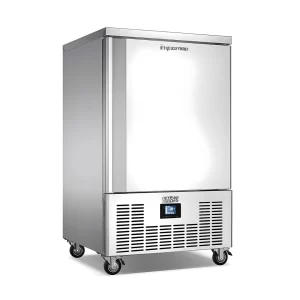


The IMPOMAC IUC15 BLAST FREEZER was developed to meet the most demanding demands in various sectors, including Food Service, Health and Laboratories, Bakery, and many others. Designed to achieve ultra-low temperatures, the IUC15 is the ideal choice for those seeking quality preservation, food safety and operational efficiency. With advanced technology and robust design, this blast freezer is an indispensable tool to guarantee the integrity and longevity of your products.
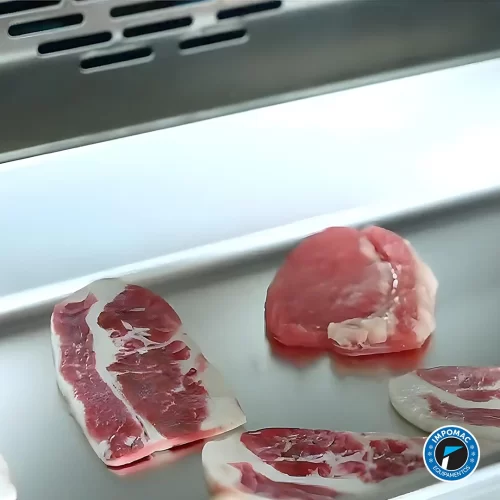
Maintains the integrity, flavor and texture of products, preventing the formation of large ice crystals.
It offers temperatures of -40°C, meeting various storage needs.
Perfect for use in sectors such as food service, healthcare, laboratories and baking.
Designed to consume less energy without compromising performance, reducing operating costs.
305 liters, providing enough space for large volumes of products.
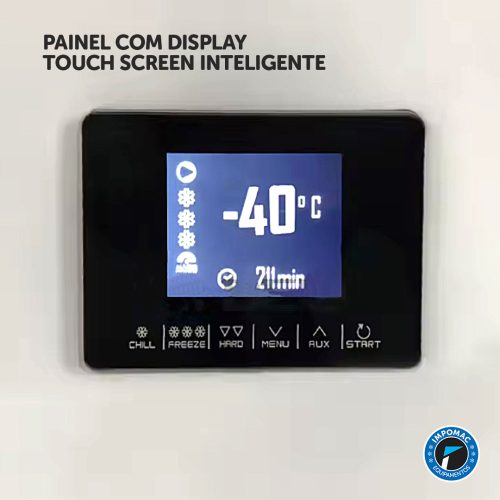
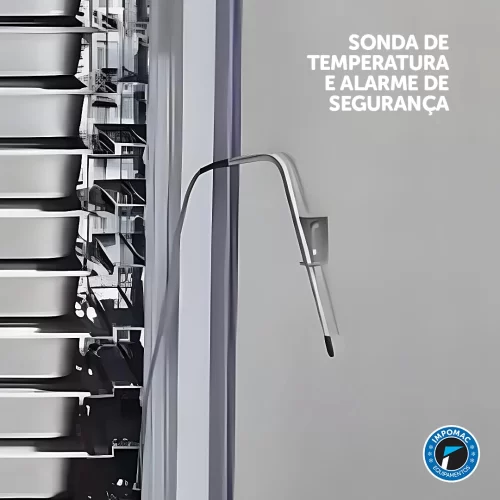
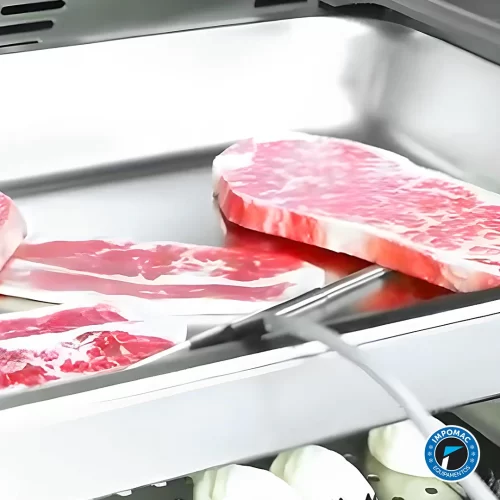
Touch button with LCD display and food temperature probe, ensuring accuracy and ease of use.
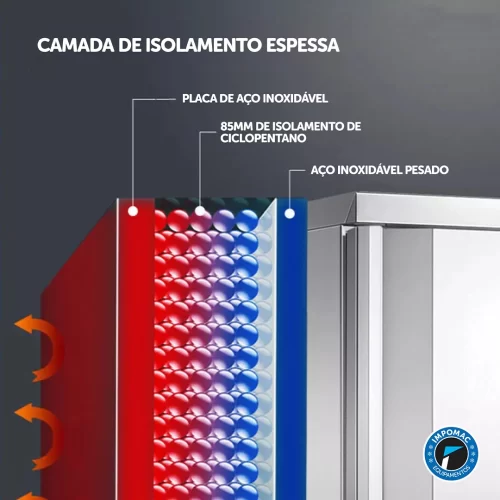
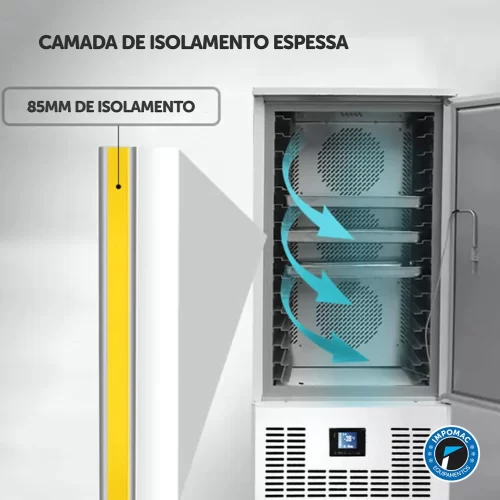
Made with AISI 304 material, with a thickness of 85 mm, ensuring a long useful life and resistance to continuous use.
Equipped with temperature alarms and security lock to protect stored contents.
Specialized technical assistance available throughout Brazil, ensuring fast and effective support.
Meets the highest food safety standards and storage regulations.
The IMPOMAC IUC15 BLAST FREEZER is a versatile solution that meets the needs of different market segments, including:
Restaurants, hotels, buffets, catering, fast food.
Research laboratories, clinics, hospitals, blood banks, pharmacies.
Bakeries, confectioneries, bakery industries, pasta and bread manufacturers.
Processing of meat, dairy, frozen, ice cream.
Biotechnology companies, genetic research, preservation of modified organisms.
Storage of vaccines, medicines, sensitive pharmaceutical products.
Storage of biological samples, enzymes, reagents.
Universities and research institutions.
Storage of sensitive ingredients, research and development of new products.
MAIN DIFFERENTIALS |
– Preservation of Quality and Freshness: Maintains the texture, flavor and freshness of food. – Increased Service Life: Longer storage and flexibility in planning. – Operational Optimization: Batch production, waste reduction. – Food Safety: Inhibition of microorganisms and compliance with regulations. |
BENEFITS |
– Waste reduction: Minimizes losses by preserving unsold products. – Operational efficiency: Reduces the need for daily production, optimizing resources. – Flexibility in planning: Allows you to store products for periods of high demand. – Meeting fluctuating demands: Ensures constant availability of products, even during peak consumption. |
MAIN DIFFERENTIALS |
– Storage of Biological Samples: Preserves cells, tissues, DNA, RNA, and proteins. – Maintenance of Cell Cultures: Preserves cell cultures at low temperature. – Conservation of Enzymes and Reagents: Guarantees stability and effectiveness at ultra-low temperatures. – Vaccine Storage: Ideal for vaccines that require deep freezing. |
BENEFITS |
– Integrity preservation: Ensures that samples and medicines maintain their properties for long periods. – Regulatory Compliance: Meets strict safety standards for storing sensitive materials. – Protection against degradation: Prevents the deterioration of biological samples and pharmaceutical products. – Increased useful life of inputs: Allows safe storage of reagents and enzymes for extended periods. |
MAIN DIFFERENTIALS |
– Preservation of Quality and Freshness: Maintains the structure, flavor and quality of products. – Increased Service Life: Longer storage and flexibility in planning. – Operational Optimization: Batch production, waste reduction. – Product Diversification: Storage of a wide variety of bakery products. |
BENEFITS |
– Extending the useful life of products: Allows you to store products for future sale without loss of quality. – Consistency in quality: It guarantees that bread, cakes and other bakery products maintain the same quality, regardless of storage time. – Flexibility in production: Produce in large batches and freeze to meet demands as needed. – Waste reduction: Minimizes losses from unsold products, optimizing profits. |
MAIN DIFFERENTIALS |
– Safe Storage: Preserves meat, dairy products, frozen foods and ice cream without loss of quality. – Efficient Processing: Allows rapid storage of large volumes. – Ice Crystal Reduction: Maintains the texture of food, preventing structural damage. – Ingredient Stability: Extends the shelf life of perishable ingredients. |
BENEFITS |
– Increased product lifespan: Ensures that perishable foods can be stored for longer without compromising quality. – Waste reduction: Minimizes food losses during processing and storage. – Flexibility in production: Allows the storage of large batches, adapting to fluctuations in demand. – Improved operational efficiency: Optimizes the use of resources, reducing the need for continuous production. |
MAIN DIFFERENTIALS |
– Preservation of Modified Organisms: Stores genetically modified organisms in ideal conditions. – Conservation of Cell Cultures: Maintains viable cell cultures for long periods. – Storage of Enzymes and Reagents: Ensures the stability of biotechnological inputs. – Precise Temperature Control: Facilitates advanced genetic research. |
BENEFITS |
– Preservation of genetic material: Ensures the viability of modified organisms for future research. – Regulatory Compliance: Meets safety standards for the conservation of genetically modified organisms. – Advanced search support: Facilitates the development of new products and technologies in biotechnology. – Long-term stability: Ensures that reagents and enzymes remain effective for long periods. |
MAIN DIFFERENTIALS |
– Storage of Vaccines and Medicines: Ensures the integrity of temperature-sensitive products. – Compliance with Strict Standards: Meets safety standards for pharmaceutical storage. – Product Stability Maintenance: Ensures long-term effectiveness of medications. – Strict Temperature Control: Ensures product stability during storage. |
BENEFITS |
– Guarantee of product integrity: It ensures that medicines and vaccines maintain their properties and effectiveness. – Strict Regulatory Compliance: Meets international pharmaceutical storage standards. – Waste reduction: Minimizes losses of valuable pharmaceutical products. – Operational efficiency: Optimizes the use of resources in the storage of sensitive pharmaceutical products. |
MAIN DIFFERENTIALS |
– Storage of Biological Samples: Ensures the integrity of cells, tissues, DNA and proteins. – Conservation of Enzymes and Reagents: Maintains critical inputs in optimal conditions. – Precise Temperature Control: Facilitates the preservation of sensitive materials. – Compliance with Scientific Standards: Meets required standards for sample storage. |
BENEFITS |
– Advanced search support: Ensures sample integrity for long-term studies. – Reduction of input costs: Minimizes loss of valuable reagents and materials. – Efficiency in long-term studies: Allows safe storage of materials for long-term studies. – Preservation of sample quality: Ensures that biological samples maintain their viability for future analysis. |
MAIN DIFFERENTIALS |
– Storage of Teaching Materials: Preserves educational inputs, such as biological samples. – Ease of Operation: Accessible and easy-to-use equipment. – Stable Temperature Control: Ensures the integrity of sensitive materials. – Compatibility with Academic Research: Supports long-term studies and experiments. |
BENEFITS |
– Support for advanced educational programs: It facilitates the carrying out of experiments and academic research. – Reduction of costs with teaching materials: Minimizes the loss of sensitive educational inputs. – Efficiency in academic research: Ensures the preservation and availability of critical materials for studies. – Preservation of the quality of educational materials: Ensures that educational inputs and samples remain viable for teaching and research. |
MAIN DIFFERENTIALS |
– Storage of Sensitive Ingredients: Ensures the quality of perishable inputs. – Preservation of Products in Development: Maintains the integrity of new products. – Precise Temperature Control: Ensures the stability of ingredients during storage. – Compatibility with Industrial Processes: Integrable with production and development systems. |
BENEFITS |
– Reduction of input waste: Minimizes loss of sensitive ingredients during storage and production. – Efficiency in research and development of new products: Ensures new products are stored in optimal conditions for testing and analysis. – Preservation of the quality of ingredients: Ensures that sensitive inputs maintain their properties and flavors. – Support for complex industrial processes: Facilitates the integration of the blast freezer into industrial processes, maintaining quality right up to the point of sale. |

É um padrão reconhecido internacionalmente que define os requisitos para um controle eficaz da segurança alimentar.

Easy intuitive operation, according to your needs.

1800W

Thermal insulation layer with cyclopentane

Everything is simple and intuitive in the installation process.

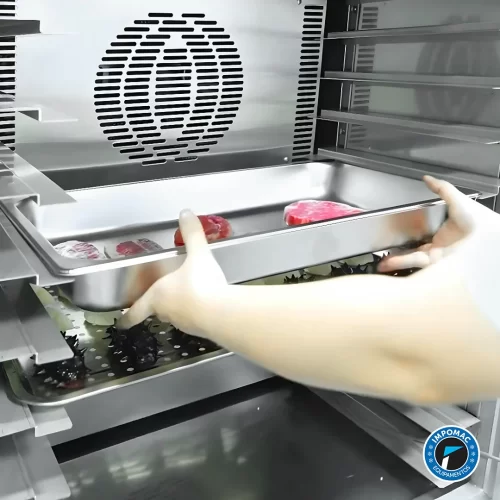
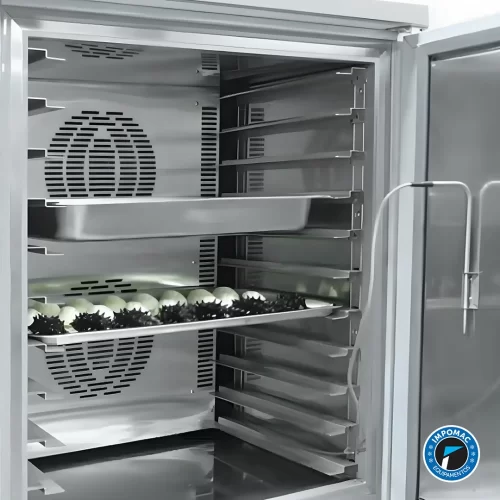
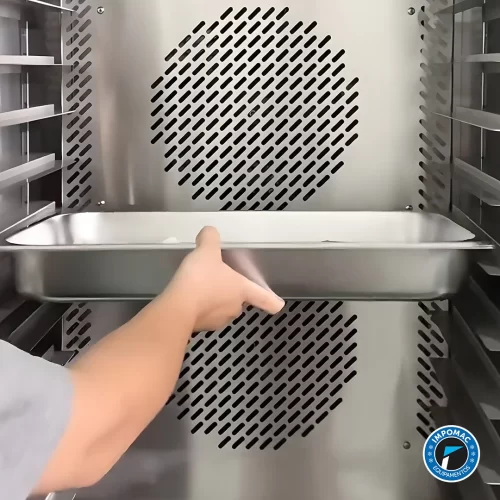
15 levels for better internal organization. 75mm between trays. Trays already included.


By electric heating

38kg / 240min

We have specialized technical assistance.

1 year from factory.



305 L
-40°C
75 kg
90 minutes
(+75°C -> +3°C)
37,5 kg
240 minutes
(+75°C -> -18°C)
4 (32°C & 55% R.H.)
220-240 V / 50 Hz
Touch button with LCD display and food temperature probe
AISI 304
85 mm
Cyclopentane (40 kg/m³)
1
1
75 mm
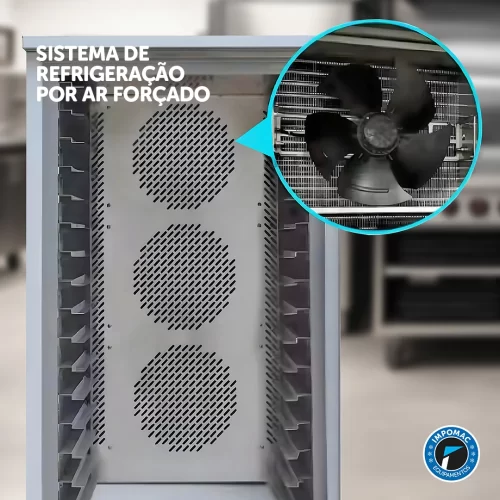
Forced air
Electric heater
1800 W
1 1/4 HP
R404A
Sustainability is a priority. That's why our ice machines are powered by natural refrigerant gas, a conscious choice that reflects our commitment to the environment. This gas not only significantly reduces greenhouse gas emissions, but also improves the energy efficiency of machines. With natural refrigerant gas, we guarantee that every ice cube produced comes with the promise of a greener planet and superior performance, aligning technological innovation with ecological responsibility.